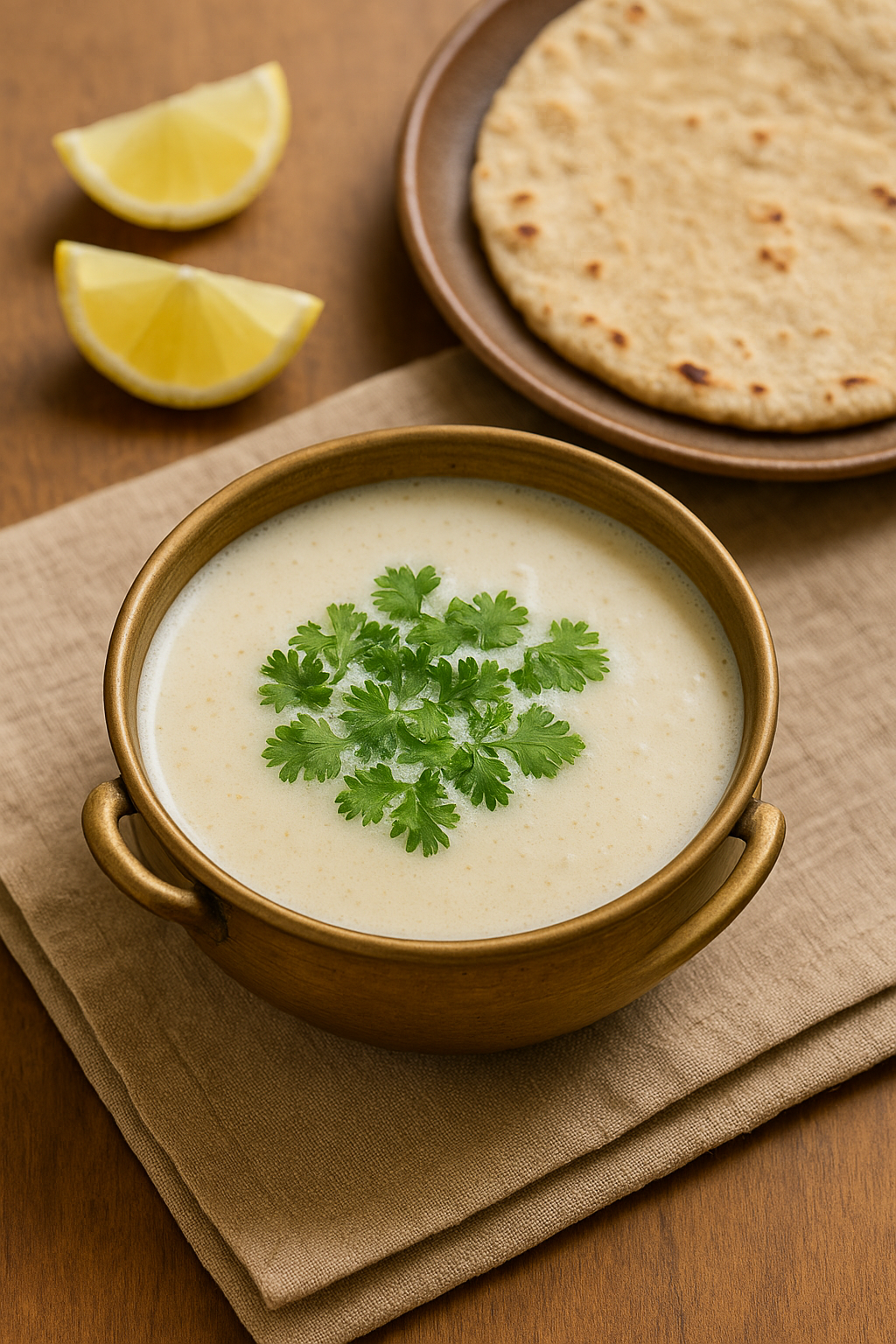
Pandhara Rassa – Kolhapuri White Curry of Soulful Wellness. A rich yet soothing Kolhapuri white curry made from coconut milk, cashews, and mild spices—Pandhara Rassa offers soulful comfort, wellness, and authentic Maharashtrian flavor.
Pandhara Rassa—literally “white curry”—is the quiet poetry of Kolhapur’s bold cuisine. In a land famous for its fiery Tambda Rassa (red curry), this gentle, creamy broth speaks in whispers of warmth, balance, and healing. Traditionally served alongside spicy meat preparations, it was believed to “cool” the body after a heavy meal, restoring harmony to digestion. The white hue, derived from coconut milk, poppy seeds, and cashews, is symbolic of purity and calm—a subtle reflection of wellness that runs through old Maharashtrian kitchens.
This dish’s roots go deep into the households of Maratha warriors, who would sip it after long days on the battlefield. The bone broth base, simmered with soothing spices like cardamom, cinnamon, and fennel, offered strength and recovery without heaviness. The inclusion of healthy fats from coconut and nuts ensured lasting energy, while the gentle aroma of spices created a sense of comfort. Over time, Pandhara Rassa became the beloved “reset” curry of Kolhapur—simple enough for daily meals, luxurious enough for feasts.
From a health perspective, this recipe is a study in balance. It’s gluten-free, nourishing, and rich in electrolytes and essential minerals. The coconut milk supports heart health and metabolism, the poppy seeds calm the nervous system, and the lean protein from chicken aids muscle repair. Even the aroma is therapeutic—those who cook it often say the scent alone soothes the mind.
In a world chasing complex diets and exotic ingredients, Pandhara Rassa remains a reminder that ancient wisdom still simmers quietly in our pots. It’s the kind of dish that doesn’t shout for attention—it earns it with grace, depth, and the kind of comfort only tradition can deliver.
Ingredients
Directions
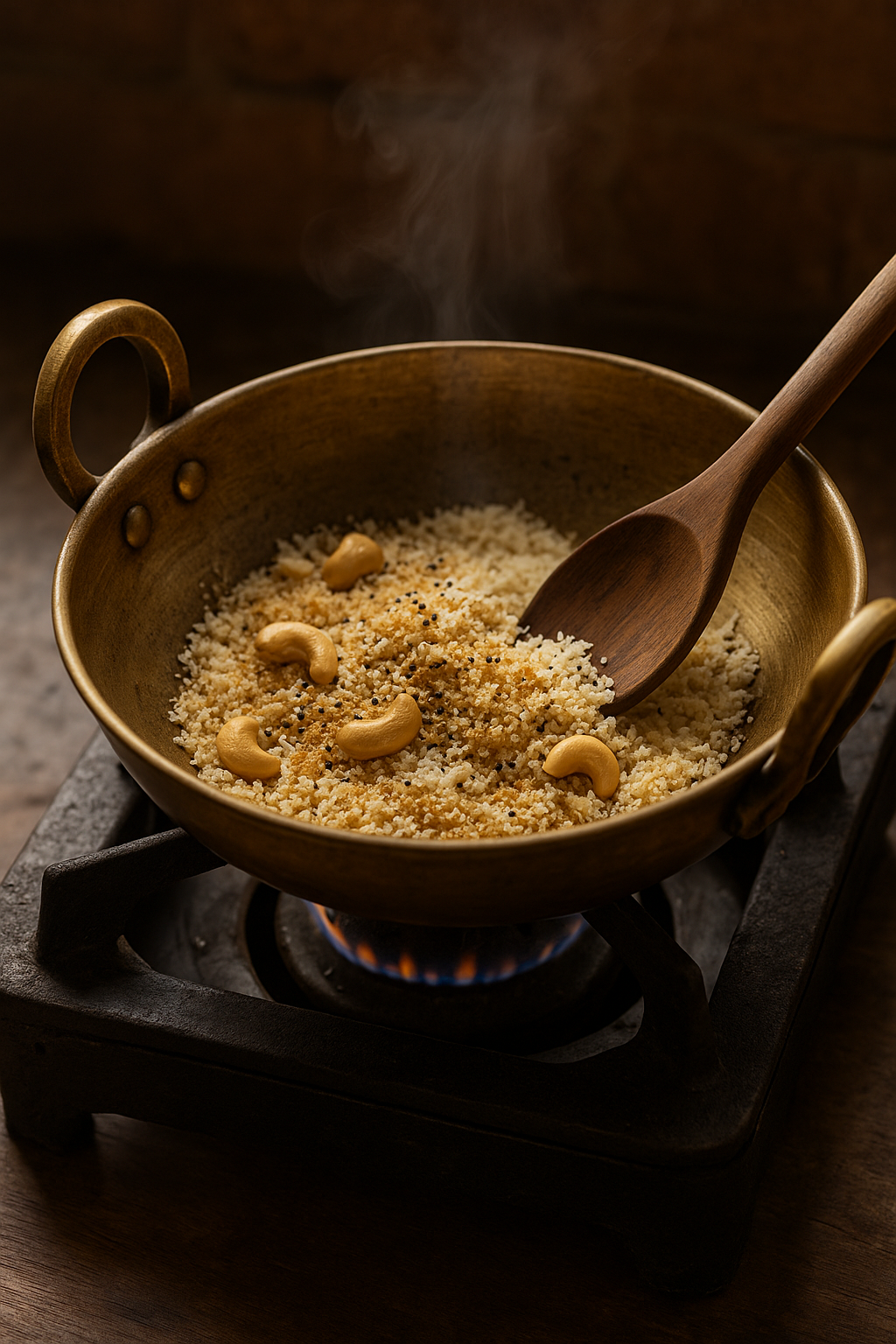
Dry roast the grated coconut, sesame seeds, poppy seeds, and cashews on a low flame until aromatic. Cool slightly and blend to a fine paste using warm water.
In a large pot, heat ghee and oil together. Add bay leaf, cardamoms, cinnamon, cloves, peppercorns, and fennel seeds. Once fragrant, add sliced onions and sauté until translucent. Stir in the ginger-garlic paste and cook briefly.
Add the mutton pieces and sauté until they change color, this searing will lock in the flavor and juices. Mix in the coconut-cashew paste, coating each piece evenly. Pour in mutton stock and simmer for 20–25 minutes, until tender.
Stir in the coconut milk and salt. Simmer gently for 5 more minutes—do not let it boil, to preserve the white color and smooth texture. Turn off the heat and let it rest for 5 minutes. Garnish with fresh coriander and serve hot with bhakri or steamed rice.
Always roast your coconut and nuts on a low flame until they just begin to release oil—this subtle browning awakens flavor without darkening the curry. For those avoiding red meat, substitute chicken stock with vegetable broth and add a spoon of almond butter for creaminess.
For restaurant-level texture, strain the cooked gravy once before final simmering. It gives that velvety “white shorba” finish without losing aroma. Garnish with slivered almonds or coriander stems for an elegant contrast of texture and freshness. The key lies in balance—Pandhara Rassa should be fragrant, not fierce.
Swapping chicken for mutton transforms Pandhara Rassa into a light wellness broth from a restorative, nutrient-dense tonic—a perfect lighter version of the same soulful dish.
Community Rating
No ratings yetPopular Recipes